The Hybrid Work Models and the Impact on Recruitment
Hybrid impact is no longer a theoretical idea—it’s something every hiring manager and recruiter is feeling in real time.
As companies move away from traditional hybrid work models toward more clearly defined remote-first or in-office structures, the hybrid impact on recruitment is reshaping how organizations attract, evaluate, and retain talent.
The hybrid impact: how work models are shifting
The hybrid work model, which blends remote and in-office work, surged during and after the pandemic as a practical middle ground. It gave employees flexibility while still preserving in-person collaboration.
Today, the picture is more complex:
-
Some organizations are going fully remote and building distributed teams.
-
Others are calling employees back to the office most or all of the time.
-
Many are redefining “hybrid” more narrowly or differently than before.
This hybrid impact forces companies to clarify what flexibility means in practice—and it directly influences who applies, who accepts offers, and who stays long term.
Remote‑first roles on the rise
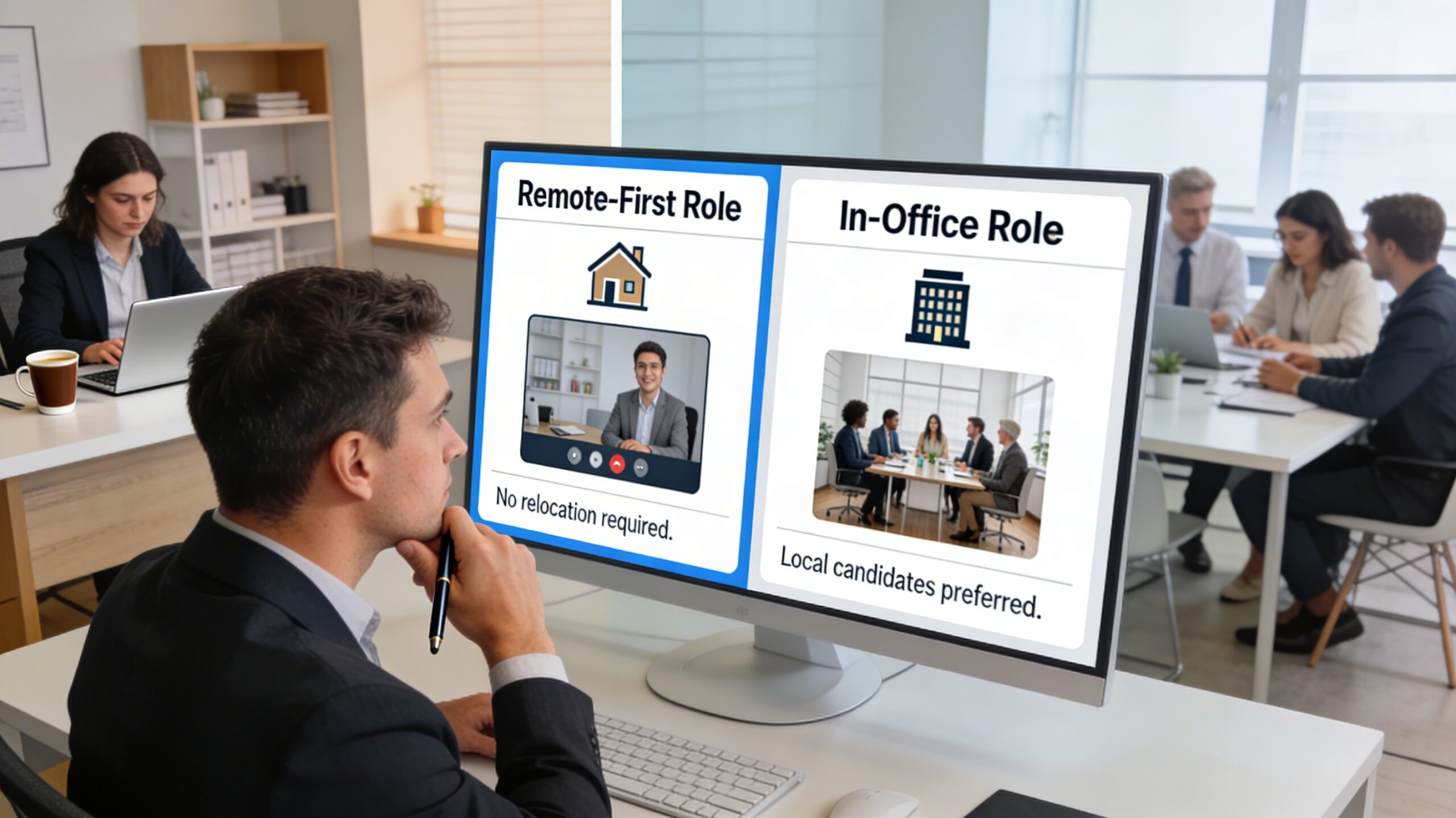
One major hybrid impact is the growth of remote‑first roles.
When organizations drop the requirement to live near headquarters, they can:
-
Access a broader, often more specialized talent pool.
-
Recruit in markets with different salary expectations or skills availability.
-
Offer roles to candidates who cannot or do not want to relocate.
For candidates, this opens doors to work with leading companies regardless of where they live. Recruiters, in turn, must adapt by:
-
Screening for self‑motivation, communication skills, and time‑management.
-
Prioritizing experience with remote tools and asynchronous collaboration.
-
Designing processes (interviews, onboarding, performance reviews) that work fully online.
In short, the hybrid impact here is clear: remote‑first hiring changes not just where people work, but the kind of people who succeed.
Renewed emphasis on local talent
At the same time, many companies stepping away from hybrid models are refocusing on local or relocation‑ready talent.
This has its own hybrid impact:
Upsides
-
Easier scheduling and face‑to‑face collaboration.
-
Stronger in‑person culture and informal communication.
-
Simpler management for leaders who prefer onsite teams.
Downsides
-
Smaller talent pools, especially for niche or senior roles.
-
Potentially higher competition in local markets.
-
Reduced diversity of geography, background, and experience.
Recruitment teams in these organizations must get sharper on local employer branding, relocation support, and long‑term career paths to remain competitive.
Flexible work as a competitive advantage
As some employers tighten in‑office requirements, those that still offer hybrid or fully remote options gain an edge.
This is another major hybrid impact on recruitment:
-
Candidates who value work‑life balance will prioritize flexible employers.
-
Companies with clear, credible flexibility stand out in job postings.
-
Offers that include flexibility can win over higher salary offers without it.
For recruiters, this means:
-
Highlighting flexibility prominently in job descriptions and outreach.
-
Being transparent about expectations (days in office, core hours, travel).
-
Using real employee stories to prove that flexibility is more than a buzzword.
In a competitive market, flexible work isn’t a perk—it’s a differentiator.
Clearer job descriptions, clearer expectations
As hybrid work evolves, vague language (“some remote flexibility,” “hybrid environment”) is no longer enough.
Part of managing the hybrid impact is tightening up job descriptions:
-
Spell out whether roles are remote‑first, office‑based, hybrid, or location‑specific.
-
Clarify expectations: days onsite, time zones, travel, and core collaboration hours.
-
Align internal stakeholders so candidates get consistent messages from everyone they meet.
This clarity helps:
-
Attract candidates who are genuinely aligned with the setup.
-
Reduce offer declines due to surprise requirements.
-
Strengthen trust early in the candidate experience.
What the future of flexible work might look like
Hybrid work may be declining in its original form in some organizations, but that doesn’t mean flexibility is disappearing. The hybrid impact is pushing companies to rethink how they offer flexibility in new ways:
-
Compressed workweeks, flexible hours, or “core hours” models.
-
Role‑based flexibility (some positions fully remote, others office‑based).
-
Periodic in‑person collaboration weeks instead of weekly hybrid schedules.
To navigate what comes next, organizations will need to stay agile—ready to adjust based on market conditions, business needs, and employee feedback.
Culture, technology, and the hybrid impact
Whatever direction a company chooses—remote‑first, local‑first, or a tighter version of hybrid—the real test is how it supports people day‑to‑day.
Key areas to focus on:
-
Culture and engagement
-
Intentional communication, clear leadership, and recognition matter more when teams are split across locations.
-
Managers need training to lead effectively in remote and in‑office settings.
-
-
Technology and infrastructure
-
Robust collaboration tools, secure remote access, and reliable hardware are essential.
-
Office spaces may need redesigning to support hybrid meetings and flexible seating.
-
Handled well, these investments can turn the hybrid impact into a long‑term advantage in recruitment and retention.
What this means for recruitment teams
For recruiters and talent leaders, the hybrid impact comes down to a few practical questions:
-
Are we clear about how and where work happens in each role?
-
Do our job descriptions and messaging reflect reality, not wishful thinking?
-
Are we leveraging flexibility—whatever form it takes—as a strategic advantage?
-
Do our processes evaluate candidates for success in our specific work model?
Companies that answer “yes” to these questions will be better positioned to attract and keep the talent they need—no matter how the hybrid impact continues to evolve.
About the Author
Tom Daly, a retired Marine Corps veteran, effectively merges his 20+ years of military and 20+ of corporate experience. He’s the Founder of Ridgeback Business Solutions, renowned for team-building support. To learn how Ridgeback can assist your team, contact Tom at Info@RidgebackRecruiting.com.